- Home
- Angry by Choice
- Catalogue of Organisms
- Chinleana
- Doc Madhattan
- Games with Words
- Genomics, Medicine, and Pseudoscience
- History of Geology
- Moss Plants and More
- Pleiotropy
- Plektix
- RRResearch
- Skeptic Wonder
- The Culture of Chemistry
- The Curious Wavefunction
- The Phytophactor
- The View from a Microbiologist
- Variety of Life
Field of Science
-
-
Change of address1 year ago in Variety of Life
-
Change of address1 year ago in Catalogue of Organisms
-
-
Earth Day: Pogo and our responsibility1 year ago in Doc Madhattan
-
What I Read 20241 year ago in Angry by Choice
-
I've moved to Substack. Come join me there.1 year ago in Genomics, Medicine, and Pseudoscience
-
-
-
-
Histological Evidence of Trauma in Dicynodont Tusks7 years ago in Chinleana
-
Posted: July 21, 2018 at 03:03PM8 years ago in Field Notes
-
Why doesn't all the GTA get taken up?8 years ago in RRResearch
-
-
Harnessing innate immunity to cure HIV10 years ago in Rule of 6ix
-
-
-
-
-
-
post doc job opportunity on ribosome biochemistry!11 years ago in Protein Evolution and Other Musings
-
Blogging Microbes- Communicating Microbiology to Netizens11 years ago in Memoirs of a Defective Brain
-
Re-Blog: June Was 6th Warmest Globally12 years ago in The View from a Microbiologist
-
-
-
The Lure of the Obscure? Guest Post by Frank Stahl14 years ago in Sex, Genes & Evolution
-
-
Lab Rat Moving House14 years ago in Life of a Lab Rat
-
Goodbye FoS, thanks for all the laughs15 years ago in Disease Prone
-
-
Slideshow of NASA's Stardust-NExT Mission Comet Tempel 1 Flyby15 years ago in The Large Picture Blog
-
in The Biology Files
A plant pundit comments on plants, the foibles and fun of academic life, and other things of interest.
Showing posts with label Aster family. Show all posts
Friday Fabulous Flower - Goldenrod
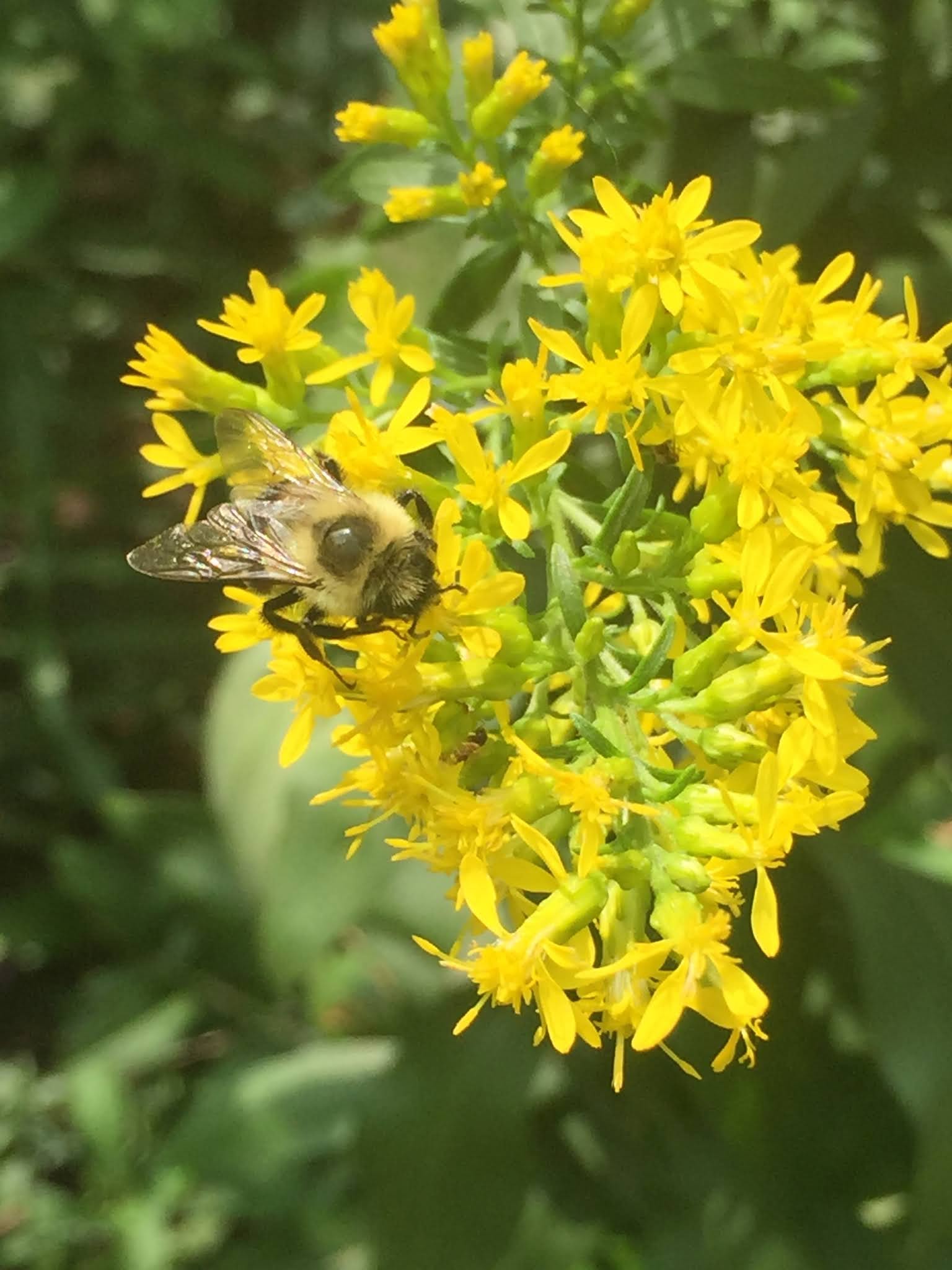
Late summer and fall are the flowering season of most goldenrods, and as a result they get a bad rap. And since this happens virtually every year, let TPP explain. This is also hay fever season and many people suffer from a pollen allergy, but let TPP assure you that goldenrod is not at fault. Here's the general rule, if you see the flowers, that is, if they form a visual display, they are not wind pollinated, they are animal pollinated. It's just that goldenrod happens to flower at about the same time as ragweed, whose flowers you never have noticed, but because it is wind pollinated it makes copious amounts of pollen. TPP is not actually allergic, but his nose can tell when there is a lot of pollen in the air. Most goldenrods have yellow-gold colored flowers that are rather small but clustered together to make a bigger display. Goldenrods are in the Aster/daisy family (old name -Compositae; correct name - Asteraceae) and like daisies or sunflowers their heads of small flowers mimic large flowers by arranging ray flowers around the margin like petals, and using disk flowers to make the central button. Goldenrods mostly just have small clusters, heads, of disk flowers, and this particular species, probably Solidago juncea, early goldenrod, has ray flowers too, looking like petals, and the insects really do love these flowers as the bee attests.
Friday Fabulous Flower - Compass Plant
As mentioned yesterday, the prairie is in bloom, and given the reasonably abundant rain, the vegetation is lush and tall. The compass plant (Silphium laciniatum) is one of the prairie emergents whose inflorescence emerges above the other prairie vegetation at least at this time of year. The inflorescences are around 6-6.5 feet tall and it is just beginning to flower, and as this image shows it is quite stunning. Each "flower" is actually an inflorescence typical of the sunflower/aster family. The image of a flower, and without question the image floral visitors react to is the whole "bloom", is presented by the ray flowers around the periphery each with a strap-like corolla lobe and the central disk flowers each with a smaller 5-lobed corolla. Each "bloom" is around 3 inches across. This is a common enough strategy; when you have small flowers, cluster them together for a bigger display.
Friday Fabulous Flower - Globe Thistle, a drought survivor
While lots of plants are looking rather sad, the globe thistle (Echinops and uncertain of the cultivar or its origin), while a bit shorter than usual, is flowering pretty normally. These are tough plants and quite drought tolerant, up to a point, and the upper midwest is getting to that point awfully fast. As you can tell from the inflorescence, this is a member of the Aster or Sunflower family. Rather than forming a flat head, the globe thistle gets its name from having a globose head. It also has no ray flowers, the ones that form the "petals" in sunflowers. This one is just beginning to flower and it will attract a pretty wide array of visitors. The individual flowers with 5 corolla lobes are pretty easy to see while in things like sunflowers you have to look much closer. The plant's foliage is a bit coarse, thistly, so best to plant them among other perennials of similar height. It's good to have some tough plants around that will provide some color no matter what.
Subscribe to:
Posts (Atom)

