in The Greenhouse
- Home
- Angry by Choice
- Catalogue of Organisms
- Chinleana
- Doc Madhattan
- Games with Words
- Genomics, Medicine, and Pseudoscience
- History of Geology
- Moss Plants and More
- Pleiotropy
- Plektix
- RRResearch
- Skeptic Wonder
- The Culture of Chemistry
- The Curious Wavefunction
- The Phytophactor
- The View from a Microbiologist
- Variety of Life
Field of Science
-
-
in RRResearch
-
in Skeptic Wonder
-
in The Large Picture Blog
-
in Life of a Lab Rat
-
in PLEKTIX
-
in C6-H12-O6
-
in Games with Words
-
in The Biology Files
-
in Rule of 6ix
-
in inkfish
-
in Moss Plants and More
-
in Disease Prone
-
in Genomics, Medicine, and Pseudoscience
-
in Protein Evolution and Other Musings
-
in Angry by Choice
-
in The Astronomist
-
in Catalogue of Organisms
-
in Variety of Life
-
in The Culture of Chemistry
-
in Field Notes
-
in Sex, Genes & Evolution
-
in A is for Aspirin
-
in The Phytophactor
-
in Pleiotropy
-
in Chinleana
-
in Memoirs of a Defective Brain
-
in The View from a Microbiologist
-
in Labs
-
in History of Geology
-
in The Curious Wavefunction
-
in Doc Madhattan
A plant pundit comments on plants, the foibles and fun of academic life, and other things of interest.
Showing posts with label spiderwort. Show all posts
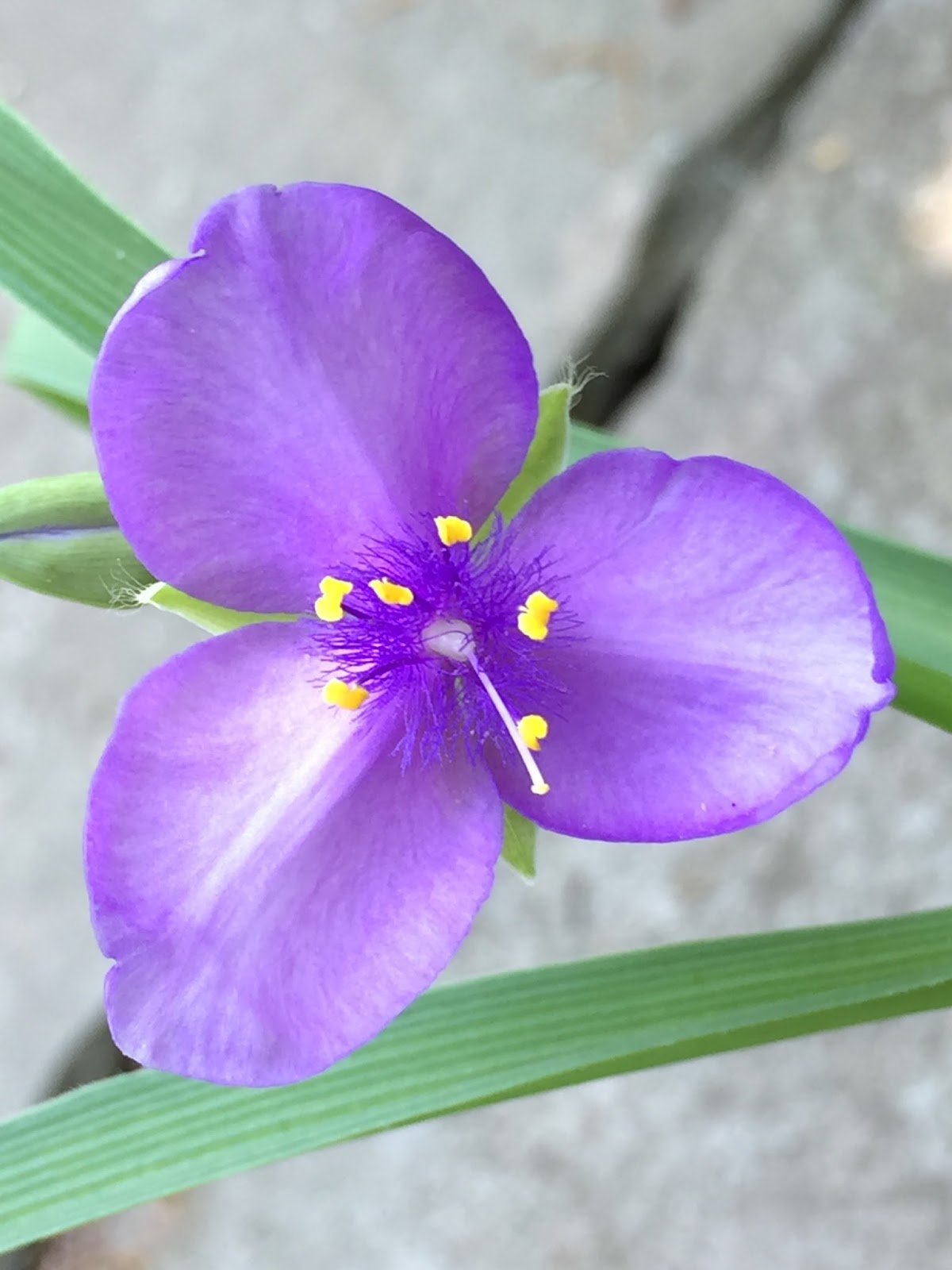
Friday Fabulous Flower - spiderwort
Various species and cultivars of the genus Tradescantia (spiderworts) make very nice additions to your perennial garden and naturalized gardens, although they can be a bit weedy, so dead heading is a good idea. The flowers are fairly large, 1" diam, and blue to purple (like in the image); some cultivars are lighter, almost white, or more purple. They all have the sort of hairy looking center of the flower (the spider?). These are long filamentous hairs (trichomes) on the stamen filaments. Under a microscope the cells composing the hairs look rather like beads. They are mostly filled with a central vacuole, a water-filled sac that contains a purple pigment. The other cytoplasmic contents of the cells a pushed out against the cell wall occupying the ends of the cell with strands running along the cell wall. The large blobby sac is the cell's nucleus. According to biological history it was in exactly such spiderwort filament hair cells that Robert Brown, he of Brownian motion, first observed the nucleus of a cell (1833). It's a great specimen to observe the streaming of cytoplasm too.
Friday Fabulous Flower - Spiderwort
Subscribe to:
Posts (Atom)