


 Any tourist to Florence Italy will get their
fill of resurrection because of the abundance of religious-themed art. But there’s another kind of resurrection that
is very common in these parts; so called “resurrection” plants or desiccation tolerant plants. Many ferns,
clubmosses, mosses, and leafy liverworts are capable of desiccation and rehydration, sometimes quite rapidly. In this part of Tuscany,
the agricultural and urban landscape is composed of wall after wall after wall
of mostly rough limestone blocks. There’s a lot of surface area there for tough
plants who can hang onto the wall by rooting into
the cracks and crevasses between or in the rocks. Such environments are pretty harsh, very
hot and dry, intermittently hospitable after rains or during a rainy season.
Quite a number of these desiccation tolerant plants can be found on the walls
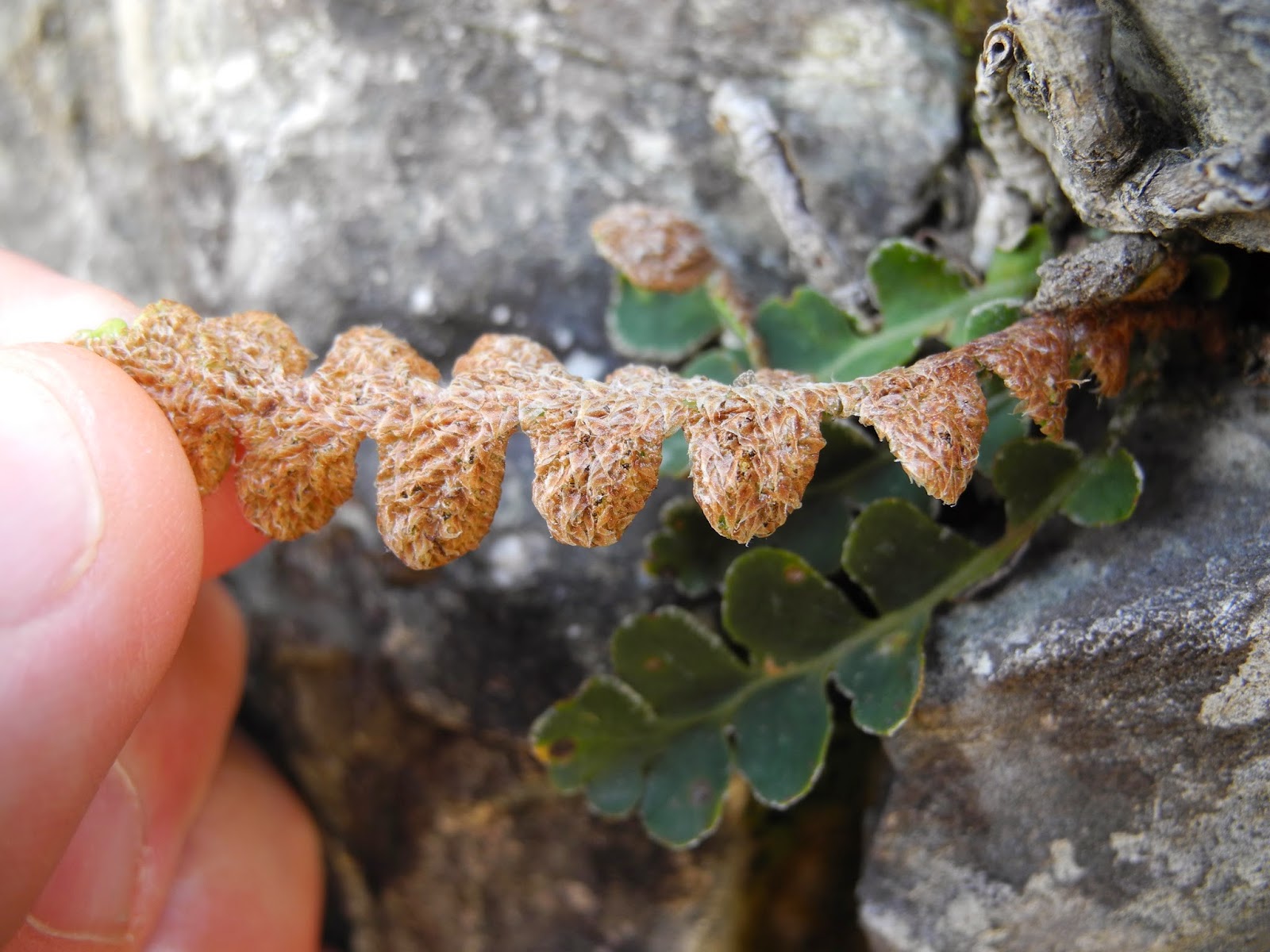
of this estate. The primary fern is
Asplenium ceterach, the rusty-backed fern, so called because the backs of the
leaves are covered with brown, scaly hairs that hide the sori. As the fern
dries out the pinnae (leaflets) and fronds curl such that the brown back side of the
leaves is exposed, and the fronds curl almost into a reverse fiddlehead. The hairiness
helps reduce water loss, perhaps reflects sunlight, and may speed rehydration by
trapping water in capillary spaces. When dehydrated these ferns seem like real crispy critters. Right now a little demonstration is
underway to see how fast some of these desiccated ferns can rehydrate. As expected some of the mosses are very fast
at this indeed. But within minutes the fronds begin to uncurl. 12 hours later the fern was rehydrated looking green and fresh. The non-botanists were quite impressed partly because the transformation is so striking, and partly because people have this idea that ferns are delicate little things.
Any tourist to Florence Italy will get their
fill of resurrection because of the abundance of religious-themed art. But there’s another kind of resurrection that
is very common in these parts; so called “resurrection” plants or desiccation tolerant plants. Many ferns,
clubmosses, mosses, and leafy liverworts are capable of desiccation and rehydration, sometimes quite rapidly. In this part of Tuscany,
the agricultural and urban landscape is composed of wall after wall after wall
of mostly rough limestone blocks. There’s a lot of surface area there for tough
plants who can hang onto the wall by rooting into
the cracks and crevasses between or in the rocks. Such environments are pretty harsh, very
hot and dry, intermittently hospitable after rains or during a rainy season.
Quite a number of these desiccation tolerant plants can be found on the walls
of this estate. The primary fern is
Asplenium ceterach, the rusty-backed fern, so called because the backs of the
leaves are covered with brown, scaly hairs that hide the sori. As the fern
dries out the pinnae (leaflets) and fronds curl such that the brown back side of the
leaves is exposed, and the fronds curl almost into a reverse fiddlehead. The hairiness
helps reduce water loss, perhaps reflects sunlight, and may speed rehydration by
trapping water in capillary spaces. When dehydrated these ferns seem like real crispy critters. Right now a little demonstration is
underway to see how fast some of these desiccated ferns can rehydrate. As expected some of the mosses are very fast
at this indeed. But within minutes the fronds begin to uncurl. 12 hours later the fern was rehydrated looking green and fresh. The non-botanists were quite impressed partly because the transformation is so striking, and partly because people have this idea that ferns are delicate little things.
