


Field of Science
-
-
Change of address1 year ago in Variety of Life
-
Change of address1 year ago in Catalogue of Organisms
-
-
Earth Day: Pogo and our responsibility1 year ago in Doc Madhattan
Showing posts with label fall flowering. Show all posts
Showing posts with label fall flowering. Show all posts
Friday Fabulous Flower - last

SYCs have master naturalists yelling "uncle".
Birders have long been familiar with LBJs before and even after he became POTUS. The botanical equivalent has always been SYCs, stinking yellow composites, yellow-flowered members of the Asteraceae, formerly the Compositae, daisies, sunflowers, asters, and so on, and on, and on. It's a big family, one of the biggest. And in grasslands, and even old fields, a heap-ton of these flower in the fall. Everytime you turn around, there is another one. Some TPP recognizes by sight, but very often it takes a bit of time in the herbarium and with available field guides to determine what plant it is. TPP is sort of over-seeing a couple of master naturalist projects, and even very diligent and hard working amateurs such as these can often "give up" on STCs. Toughies such as these take lots of practice and experience. Something that doesn't come in a book or bottle. In particular TPP found that just the sunflowers, genus Helianthus, could be a problem, so using a scanner, he constructed some cheat sheets for our local area using a combination of fairly easy to observe features to document each species. But clearly more such sheets are needed, and next week he will be in the field to help out documenting the plant contents of some restored prairie patches. Hopefully, no LBJ will be seen perched on an SYC, although if so, birders usually don't notice the latter. Hang on troops, help is on the way!
Friday Fabulous Flower - white snakeroot - Last of the season, sort of

Keeping good records - A is for Aster
Late summer flowering in Mrs. Phactor's perennial garden runs largely to the color pink but in a wide variety of plants. Here and there a little white and pale blue sneaks in. In the ongoing quest for more diversity, an aster was purchased at a native plant sale and then another aster purchased at a perennial sale elsewhere and both were planted to help fill in an area largely denuded by herbivores of one sort or another. And now several months later both asters are flowering, and both have pale blue-lavender ray flowers and yellow disk flowers (Does anyone need a refresher lesson on the inflorescences of composites? Remember, those ray flowers are not petals.). Exactly what is what is a fairly reasonable request, and one species was written down in a notebook, maybe, if that's what it refers to, and the other one was not, but which is the "other" one? Well, you don't teach plant ID for over 40 years and not be able to deal with this. Ah, yes, a quick garden check on the plants in question, asters indeed, and to make matters short, sweet, and easy, name tags had been placed appropriately at their bases when these were planted. Yea! The larger species was Aster laevis, the smooth blue aster, the Illinois native, standing about 4' tall with flowering heads (remember they aren't flowers) little over 1" in diameter (top - 2 heads). The smaller species was Aster azureus, the sky blue aster, standing about 2.5' tall with flowering heads about a half inch in diameter. Not sure if smooth refers to blue or something else, and both look pretty lavender. Both are quite delicately handsome, but TPP predicts having trouble remembering which is which in the future, which is why they were planted almost next to each other to aid the memory. To aid our recall, some notes were added to the master list of garden plants.


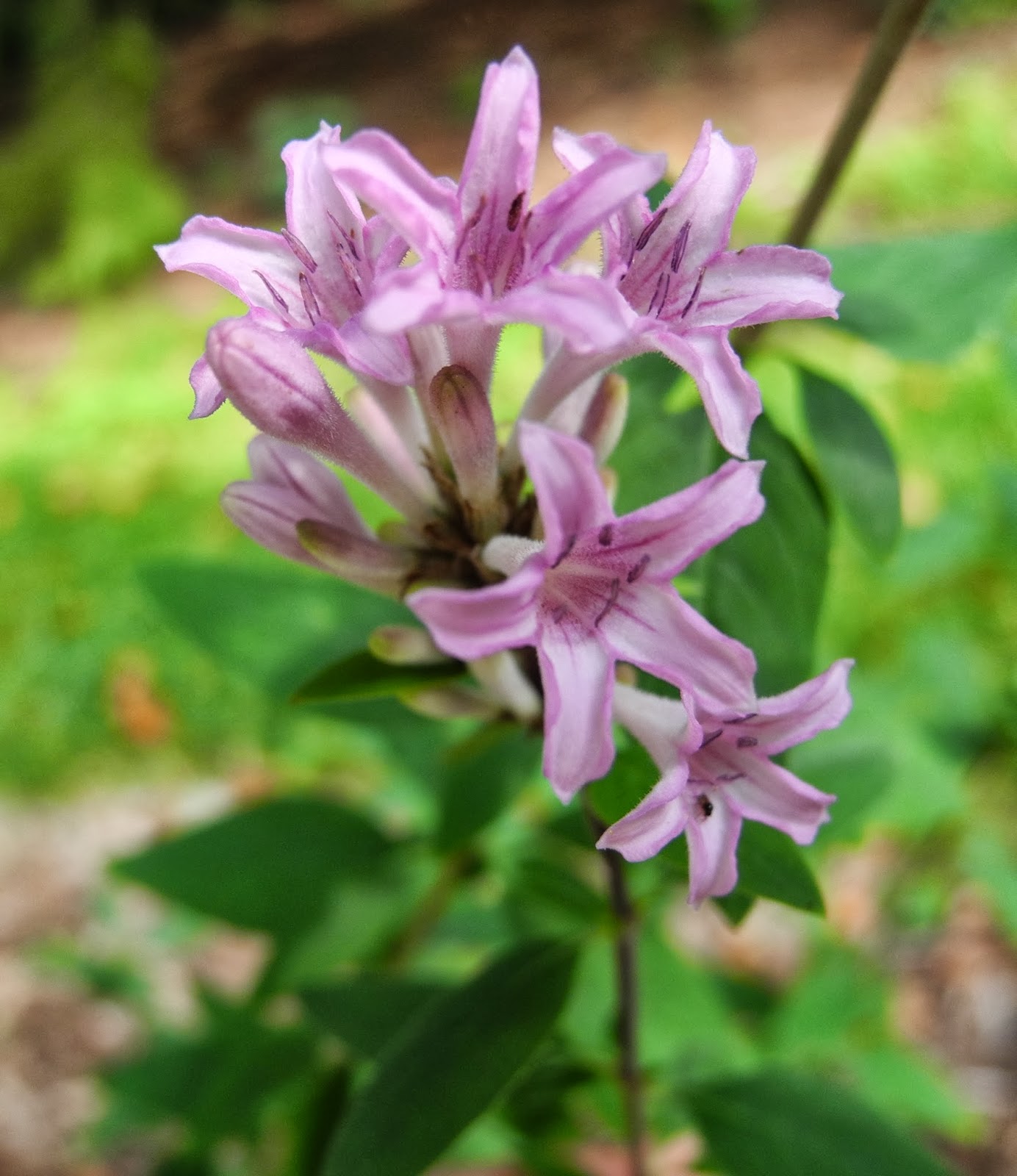
New fall flowering shrub - "dwarf lilac"
Friday Fabulous Flower - New England Aster
 The Phactor does not object to taxonomists who attempt to correctly classify organisms, however it nonetheless is annoying when a taxon and a plant's name that you have been using for over 40 years changes. Aster is one of those "know your genera" taxons where the common name and the scientific name are the same, although as nearly always the case the common use of aster is a lot more loose than the botanical use. Aster used to have something like 600 species strewn across N. America and Eurasia, but taxonomists have decided that all but one of the N. American species should be transferred to a series of other genera. So it goes with today's fabulous flower, or rather as is the case with members of the Asteraceae or sunflower family, a fabulous inflorescence of tiny flowers presenting the image of a much larger flower to pollinators and gardeners, the New England Aster, formerly Aster novae-angliae, now Symphyotrichum novae-angliae. Symphyotrichum (sim-fee-oh-try-cum) rolls off the tongue well enough, but it just isn't as familiar as Aster. This is why taxonomists hide away in herbaria in universities, museums, and botanical gardens; people would be kicking them in the shins for messing with their favorite plant names. Ah, but asethetically a New England aster by any other name would still be a massive clump of royal purple color gracing the fall landscape.
Friday Fabulous Flower - Prairie Gentian
 Fall is a distinct flowering season in the prairie community, but few people see the little gems that hide down among the tall grasses. The taller wands of the goldenrods are more familiar. What a delight to suddenly come upon the Prairie gentian (Gentiana puberulenta) and spot those brilliant blue flowers way down (only about 18" tall) among the browning grasses that presently stand some 7-8 feet tall. You cannot help but admire the intense blue color of gentian flowers whether they be little alpine species or our big flowered species, and naturally, gentian blue refers to a deep, slightly purple color. Virtually no specimens of this species have been added to our herbarium collection in the past 100 years which largely reflects how thoroughly the tall-grass prairie in
  Lincolnland has been eradicated. Another curious gentian also occurs in our area, the bottle gentian (Gentiana andrewsii), but this species is not so renowned for its glorious flowers because the corolla never opens! This is an interesting means of limiting visits to those pollinators big enough to push their way in, which means bumblebees. Hard to know when this gentian is in full bloom.
Subscribe to:
Posts (Atom)