Field of Science

Showing posts with label administrators. Show all posts

Assessing assessment in higher education


In an article entitled “The walking dead in higher Ed” (whatever that means; it never says) Geoff Irvine tees off on what passes for assessment in higher education, and at the institutional level, it is indeed woeful. So what the ever-loving hell does this guy mean when he says “they [colleges and universities] can’t prove that students are learning”? That is what this faculty member has done for the past 35 years! TPP constantly assesses student learning; they learn content, they learn to make connections with other fields of knowledge, a hallmark of a liberal education, they learn to understand concepts in more sophisticated ways, they learn to think, they learn to observe, they learn how to frame questions and test them, they learn how to learn. This all can be demonstrated to just about anybody if they have the time to wade through all the materials collected during a typical semester-long course. However, multiply this by the number of courses, and the mountain of material becomes insurmountable, so the university hired this faculty member to provide a single letter summary, a metric quite limited to be sure, and then they take my word for it that students have learned what the course was intended to teach them. Now of course what administrators really want, and what the non-educators who impose their views on higher education really want is some nice easy metric that says this university is this much better or worse than that university (nothing new here). Oh, there are lots of metrics that don’t have anything to do with learning, e.g., graduation rate. It is important to graduate students at a high rate, and it may mean you are good university, or an average university with very good students, or an easy university; it all can look the same. Teaching and learning are complicated things to assess, and at higher levels, institutional levels they never are assessed because the essential interaction is at the grass roots level between faculty and students. TPP has tried more new things, more new approaches, and more new techniques that you can imagine, some work well and others are quickly discarded. But really, you think students can pretend learning and this faculty member won't notice?

What does this guy means when he says, “the primary source of evidence for a positive impact of instruction has come from tools like course evaluation surveys”? Course evaluation surveys tell you one thing and one thing only; they tell you what students liked and what they didn’t like. As a long time professor, TPP can assure you that students can learn a great deal from things they don’t like, but fortunately as a pretty creative instructor, he has found a lot of interesting, and yes, fun things from which they also learn. And of this learning, he has direct evidence in many forms. Still you must take my word for it because even with all the materials is you won’t know what evidence of learning and what isn’t without my input.  To demonstrate this to an administrator once, TPP wrote three short justifications for a research project and told them one of was a total fabrication, an out-and-out fib, and challenged them to pick it out. Of course, in a distant field, someone could do the same to me. 

Geoff says, “the problem is that faculty and program leaders are indeed content experts, but they are no more versed in effective assessment of student outcomes than anyone else on campus.” Say what? Who else is going to assess whether students learned anything in my class? Who else would know?  You must challenge students with situations, some few of which are called exams, where they must demonstrate learning by first drawing the dots, using correct terminology and examples to label the dots, and then connect the dots in a manner that demonstrates learning when done on blank pieces of paper. 
 What Geoff was trying to accomplish with his article was pretty easy to figure out; he’s an entrepreneur, a huckster for his own company’s assessment product. He’s just one more assessment consultant trying to win the hearts and minds of clueless administrators who believe his assessment critique BS. Yes, that’s right, Geoff Irvine is the CEO of Chalk and Wire,  where you will find “all you need, to achieve your assessment vision”.  TPP envisions people learning the correct use of commas, but here we have evidence that they don’t, an illustrative assessment.

Inside Higher Ed should provide a disclaimer before they let a guy with a vested monetary interest in criticizing assessment use their publication as a bully pulpit. In case it isn't obvious, faculty generally dislike guys like Geoff because they seem to lack a basic understanding of the educational process, and a general contempt for what faculty think of as assessment, and how faculty assess learning.  At the very end of the article, Geoff says that institutions of higher education need “one essential unified goal: to make certain students are really learning”.  Always thought that was our single reason for existing, and to say we need such a goal rather indicates Geoff's disconnect with what he wishes to assess.
Open letter to a new president

Dear New President,
Welcome.  TPP has lost track of exactly how many presidents this university has had in his academic career here; that's because most of them were pretty forgettable.  You always remember the good ones (exactly one) and the really terrible ones (my first), but most of them were inbetween.  If they managed to do one or two good things before moving on we considered ourselves lucky.  Our last one has done quite a few good things, mostly on the financial and PR side of things, areas where presidents tend to be pretty influential.  Try to do the same.  Most of the administration is competent and tries to help you do your job. At times the business office and provost seem bent on the opposite, mostly by failing to understand that a university does not actually run like a business.  This will not be a rant about the provost's pseudo-business policies other than if you want units to be financially responsible for everything then you have to give those units the fiscal resources they generate.  You're not a new president and you've been around the block a few times, so it's no news to you that coaches and ADs lack institutional loyalty, period.  So why do they always get golden parachutes when they stiff the university?  My advice is hire a lawyer that knows how to write a contract that will screw anybody that screws the university.  Glad you got a raise in salary; boy, those northeastern state colleges must really pay crap for top administrators if coming here to Lincolnland is a good fiscal move.  While on this subject, us faculty could use a decent raise, all of us; it's been a good long time since we had one of those and believe it or not, we got expenses.  Makes TPP wish it were as easy to move on as it is for administrators, coaches, and ADs.  It's hard to know where exactly you should start.  Everyone, like TPP, will offer you advice.  Us old-timers know what the bad old days were all about, so don't change anything that's actually working.  However, you need to do something positive to get the ball rolling, so here's my advice: get us some decent ice cream in the student union.  How can you be any kind of half-way decent academic institution without ice cream?  And not that frozen yogurt stuff that can't make up it's mind if it's a health food or not, we been there, tasted that, and voted with our pocket books.  It folded.  There's no shortage of good ice cream locally (have them tell you about Carl's), but the rent in the student center is such that a good business man knows a bad deal when they see it.  So screw the money, we need ice cream.  This would be a good way to make your mark on the university and improve the institution.  TPP has been complaining about this for over 2 decades, and clearly lacks any clout what so ever.  Hope the move goes well.  You got a lot to learn about the great midwest and Lincolnland in particular.  People out here didn't even know what bagels were when TPP arrived all those decades ago.  Lots of people from up East don't like it here.  They get depressed when they go outside the city limits and experience the maize and soybean desert.  Well, that's all for now.  Truly your success matters to us and you can count on us to let you know how you're doing. 
Best regards,  TPP.

Deans, provosts, and presidents, oh my!

How does that song go? If you want to be happy for you academic life, never make a pretty woman your wife; no, that’s not right! For a happy academic life, never make a non-scholar your dean, provost, or president. It’s very simple, if not a scholar, they just don’t seem to get it, and in this case, the “it” they don’t get is that scholarship is both necessary and important to quality university teaching. Provost Plodder is an “educator” and seems to subscribe to the old, often criticized, characterization of universities as places where faculty research comes at the expense of teaching. This of course is often the case at big research universities, but at such institutions, no one is confused about the role of teaching and research, and prospective students would be well advised to figure out what faculty at such institutions do. However those of us who embrace the concept of an undergraduate research university would beg to differ with that characterization of research and teaching, and whenever we uppity faculty beg to differ with the provost, well, life can be difficult. At this stage of his career the Phactor has seen them come and seen them go; some just don’t go soon enough. Quality does not count with our provost, just those enrollment beans. Programs that have grabbed every warm body they can find are being rewarded with resources, and programs that have been selective and offered those students quality educational opportunities are being dunned. The cheap drives out the dear. No matter that the highest form of teaching is original investigation, and those who do not investigate themselves are in no position to teach students this skill. Do you disagree? Well, substitute “swimming” for investigate in the previous sentence to see how ridiculous your position is. It’s hard to maintain a research endeavor, it takes time and resources; it’s even harder to keep it funded, especially at smaller universities, but time spent on research just doesn’t count with our provost, although they always accept the indirect costs from research grants. The fact that our students are regularly exposed to and engage in not just little tiddles or keep-em busy projects, but participate in scientific scholarship of the highest caliber, makes little impression upon our provost. This doesn’t mean the provost is an evil person, but somewhere along the line they just lost sight, assuming they ever had it, of the fact that the highest calling of university faculty is to investigate so that they can teach not just what we know, but how we know it. So by all means, do find out what those job candidates think about the role of research in science teaching. Years ago, one dean hopeful said, “Research is encouraged, but not completely necessary at this type of university.” We all got up and headed for the door. The candidate asked, “Don’t you have any more question?” “No,” was the answer, “you got the first one wrong, so the rest don’t matter.”

How a university works - paper towels

Paper towels are one of those useful things especially in lavatories and laboratories, all of which have sinks. So of course you think sinks-paper towels, they just sort of go together, but then the VP for the physical plant whose building service workers (i.e. custodians) distribute paper towels decides that one way to save money and cut costs is to only supply paper towels to those sinks in lavatories. The laboratories are on their own. So academic departments with sink-containing laboratories will now be forced to buy their own paper towels if they want to use them at all, and darned if science isn't messy. So how does this save the university money, especially when you figure in the economy of scale? All the physical plant did was shift the cost burden to the academic units of the university. So does the central administration decide to provide those academic units that use sink-containing laboratories with more money in support of education to buy paper towels? Duh! Of course, not. Oh, and then the VP for Finance, another towering intellect, says, "And we don't want the cost passed on to the students." Now where the hell does this fool think the money is going to come from if not from lab fees? Our department budget hasn't been increased in ages, and indirect cost money from grants goes to support research activities and research infastructure. Paper towels get used in largely teaching labs. And why doesn't the university want costs passed along this way? Well, maybe because that is exactly what the university does everytime the state cuts its support to the university; it raises tuition and fees. So do as we say, not as we do, a primary administrative directive. This is the kind of frustrating, small-time, nonsensical thinking that high-powered, or even medium-powered academics have to put up with all the time. You just want to scream. And this was just about paper towels. But at least one VP will probably get a raise, probably worth more than the cost savings in paper towels, for their cost-cutting effort.

A goodbye to our legume enumerating dean

Administrators come, and administrators go, and academics down in the trenches are left to live with the legacies these administrators have wrought. In his long tenure the Phactor has watched with varying degrees of dread and pleasure as the revolving administrative door has kept turning. A former dean, an over achiever seeking his level of incompetence, left for higher office at another institution and managed to get his new faculty united behind a vote of no confidence within his first year. Who said he had no potential? Of course that means a replacement was needed here, so a department chair (economics) from our college was tapped to be the acting dean. His philosophy is simple: what have you done for me lately? Although wrapped in new gift paper, his approach was that of a classic bean counter, which surely appealed to our provost, and of course, being an economist this approach was dressed in fancy clothing. This is nothing new. However, it was his insistence that one biologist was just like another, the idea that academics within a discipline at the university level are interchangeable pieces, the idea that a particular expertise needed for a program or specialized course is not a good justification for filling an open position, is an attitude born of high schools and junior colleges, or perhaps the field of economics! Hmmm, macro, micro, maybe they’re all the same? Indeed, the Peter Principle seems to have been in full effect these past two years, but even still it is hard to imagine a stupider idea from a dean of arts and sciences. But today dawned with miserable weather and cheering news, a distant institution has been conned into hiring our acting dean. Need help with your bags? No he leaves lots of baggage. So, don’t let the door hit you in the butt on your way out. Now comes the dread, the morbid worry that the replacement might actually be worse! And that can happen!

Herding Cats

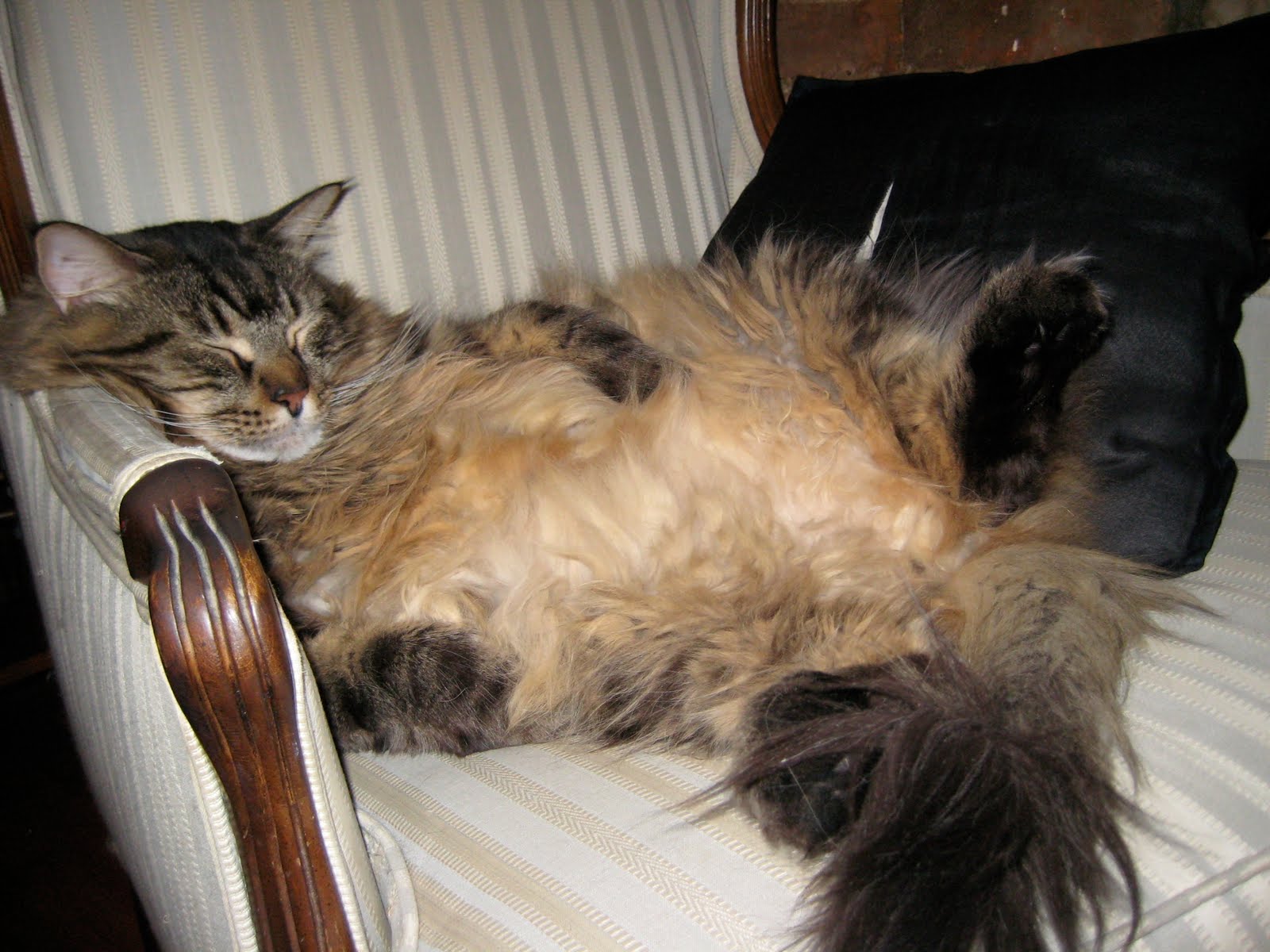
“Like cats, professors tend to be highly intelligent, deeply self-actualized, and fiercely independent. They need to be stroked occasionally, but only on their own terms and in their own good time.” (R. Jenkins, CHE, 4-16-10) And of course everyone at one time or another, particularly if they hang around college and university administrators, will have heard that getting faculty to do something is like “herding cats”. What I particularly like about Jenkins’ essay is his answer, “What’s wrong with that?”
Not all administrators think cats need to be herded, but my experiences with chairs, deans, provosts, and presidents (quite a number have come and gone during my decades in higher education) puts the ratio pretty close to 50:50. Rather than trying to “herd”, some actually try to “lead”, and some even have a goal in mind. And no question about it, the “I’m a cat” attitude of faculty drives those administrators who regard us as merely employees quite mad. We ask why and want data or studies that back up the positions and policies being proffered, and if you present analyses quite contrary to these, it is treated as an act of insubordination rather than an exercise in critical thinking and evaluation. You’d think they’d be pleased with my interest. The Phactor is not a contrarian, but my knack for finding a flaw in a plan has not necessarily always been greeted with enthusiasm. It took years of nominating one of these herdsmen for other jobs before some suckers took him off our hands, but others have just been more ambitious, and as they have moved on to bigger and better jobs, perhaps the Phactor has taken too much delight in seeing so many exemplify the Peter Principle. Now if you’ll excuse me, it’s time to curl up with some research and purr.