


Field of Science
-
-
Change of address1 year ago in Variety of Life
-
Change of address1 year ago in Catalogue of Organisms
-
-
Earth Day: Pogo and our responsibility1 year ago in Doc Madhattan
Showing posts with label cycads. Show all posts
Showing posts with label cycads. Show all posts
Today's lab - Cycads

Cycads aren't living fossils?
Well, shucks! Don’t you just hate it when science knocks a hole in one of your more romantic notions about things? Cycads are such fun organisms, so cool looking, and studied by such interesting people, with one rather short exception. The romantic notion the Phactor has always maintained about cycads was that they had about them an aura of the primeval, living fossils, throw backs to the era of dinosaurs. Now a recent molecular study of cycad evolution suggests that based upon a molecular clock the 300 or so modern species of cycad diversified from a common ancestor about 12 million years ago, more or less yesterday. True, cycads flourished during the Jurassic-Cretaceous some 200 to 65 million years ago, so it is an ancient lineage, but our extant cycads are not of this ancient stock. Individual cycads live so long, and grow so slowly that you can almost imagine them surviving for that long without any trouble, after all this young specimen of Encephalartos altensteinii from South Africa has been growing at the Royal Botanical Gardens at Kew since 1775. And then there was the time our house sitters left my pet cycads outside for the winter, treatment that greatly curtailed their potential longevity. Guess there’s always cinnamon fern. HT to Science News.
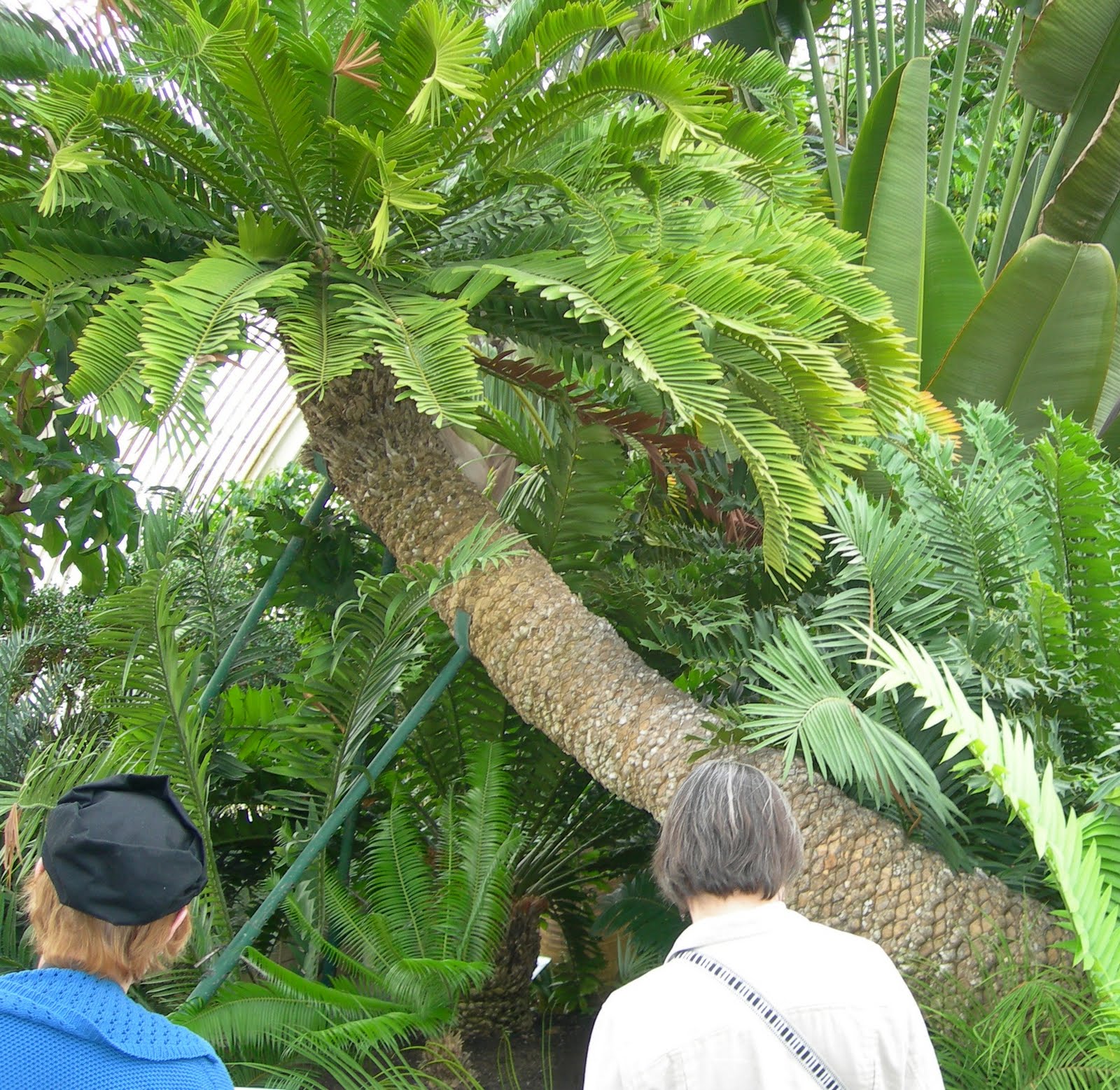 maintained about cycads was that they had about them an aura of the primeval, living fossils, throw backs to the era of dinosaurs. Now a recent molecular study of cycad evolution suggests that based upon a molecular clock the 300 or so modern species of cycad diversified from a common ancestor about 12 million years ago, more or less yesterday. True, cycads flourished during the Jurassic-Cretaceous some 200 to 65 million years ago, so it is an ancient lineage, but our extant cycads are not of this ancient stock. Individual cycads live so long, and grow so slowly that you can almost imagine them surviving for that long without any trouble, after all this young specimen of Encephalartos altensteinii from South Africa has been growing at the Royal Botanical Gardens at Kew since 1775. And then there was the time our house sitters left my pet cycads outside for the winter, treatment that greatly curtailed their potential longevity. Guess there’s always cinnamon fern. HT to Science News.
How do you tell the difference between a palm and a cycad?

 Their terrible attempts to answer this question indicate that my students really don't want to know the answer. This is one of those terrible defeating moments when you realize that your efforts to provide engaging activities, like comparing palms and cycads, were all for naught. Cycads are very palm like to the point that some are called palms, e.g., sago palm (Cycas revoluta). Cycad leaves have two rows of leaflets like that of many palms, and the leaves are borne in helical whorls at the ends of stems, and cycads often have a stocky main stem and little or no branching. However actually cycads are more fern like than palm like. The leaves develop by uncoiling like fern "fiddle heads" (left). Palm leaves encircle the stem so the trunks bear the familiar leaf scar rings. Cycad leaf scars are much smaller and helically arranged; no circles. Nobody, nobody responded correctly about cycad leaf development. Groan. This is why grading exams is such an awful thing to do. Sometimes you just want to rip off their heads and pour the botany in.
BGR #37 Addendum
The Phactor has been having a problem of late with an over active spam filter. Must have that looked after one of these days. But as a result, a very nice submission, by a very nice person (Sally) was missed until after the carnival was posted, but it's such a nice link about such a nice little cycad that everyone deserves a follow up because who doesn't love cycads. And of course wish this had surfaced out of the junk mail folder before the cycad endangered species blog was posted yesterday.
As a note to BGR participants and to give credit where credit is due, visitor traffic the past two days at the Phytophactor jumped by over 50% so hope all are seeing more visits down the line, and so far Foothills Fancies is the BGR referral leader by almost a factor of 2 to 1 over No Seeds and the Accidental Botanist combined.
As a note to BGR participants and to give credit where credit is due, visitor traffic the past two days at the Phytophactor jumped by over 50% so hope all are seeing more visits down the line, and so far Foothills Fancies is the BGR referral leader by almost a factor of 2 to 1 over No Seeds and the Accidental Botanist combined.
Plant Endangered Species - We have met the enemy, and some of them are us.

 Typical, typical, and tragically sad. The Life Lines blog about endangered species based on an article in Science points out that all major groups of vertebrates are in trouble. But look at the data. Which group is suffering the most by a huge margin, by a factor of two? Yes, cycads, the most ancient living lineage of seed plants, the virtual dinosaurs of the plant kingdom. 60% of species are rated vulnerable (vu), endangered (en), or critically endangered (cr), and they have the largest proportion of species extinct in the wild (ew), and nary a mention. This is unfortunately a very typical example of the zoo-bias that permeates biology. Wish there were corrective lens for plant blindness.
Subscribe to:
Posts (Atom)