


Field of Science
-
-
Change of address1 year ago in Variety of Life
-
Change of address1 year ago in Catalogue of Organisms
-
-
Earth Day: Pogo and our responsibility1 year ago in Doc Madhattan
Showing posts with label buttercup. Show all posts
Showing posts with label buttercup. Show all posts
Friday Fabulous Flower - last

Buttercup confusion

Friday Fabulous Flower - Very very early spring flower
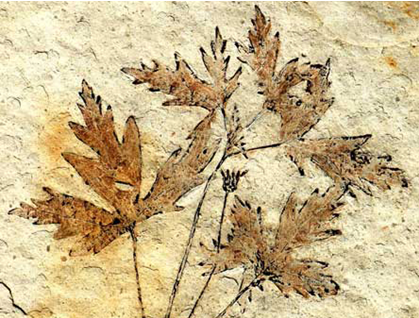 My old friend and colleague, David Dilcher, has been hard at work digging up fossils in China. So here's a very, very early spring flower, published in March 31 Nature, but aged at 124-123 million years ago in the early Cretaceous. To put this into some context, dinosaurs still reigned and would do so until the event that marks the end of the Cretaceous, a bolid impact on the Yucatan, at 65 million years ago. It bears the name Leefructus mirus, and if you were going to place it in a modern plant family, it would be a buttercup, a member of the Ranunculaceae. The significance of this fossil is that it pushes the evolution of the eudicots back to an earlier time indicating that flowering plant diversity took off early. The flower (center) is in early fruit stage.
Friday Fabulous Flower - Black Cohosh
 As the garden season winds down there are fewer choices for Friday's fabulous flower, but then a favorite plant decided to bloom, so here you go, the black cohosh, or black snakeroot, or black bugbane, none of which make this native of the north eastern North America sound very nice. In a bit of a twist, modern molecular studies have determined that this plant belongs in the genus Actea (A. racemosa), where good old Linnaeus placed it all those centuries ago based on pure morphology; for the past century it had been in the genus Cimicifuga. But no matter the name, it's the same plant, and a member of the buttercup family, which surprises people who aren't familiar with its diversity. What you actually see is an inflorescence where the floral display is largely composed of stamen filaments and a smallish single perianth whorl, a bit like mimosoid legumes. Small flowers arranged like this in either "bottle brushes" or "powder puffs" function as diverse pollinators move over the outside of the inflorescence. Once established, and this must be said, they are slow, these are great perennials under the shade of hardwood trees.
Subscribe to:
Posts (Atom)